


European Cows in the Heat
A comprehensive guide to importing cattle from the Netherlands, Germany, the UK, and Italy — the breeds, the challenges, the meat, and the economics behind one of agriculture’s most complex trades.
Holstein-Friesian
dominates the trade
The Holstein-Friesian, originating in the Netherlands and northern Germany, is the undisputed king of dairy cattle imports to Egypt and the broader MENA region. Capable of producing 35–40 litres of milk per day under optimal conditions — six times the output of the local Baladi cow — it represents the most economically compelling case for importation.
Yet the Holstein was bred for the cool, wet climates of Northwestern Europe. Moving these animals to Egypt, where summer temperatures routinely exceed 40°C, creates a cascade of physiological and logistical challenges that importers, vets, and farmers must navigate with precision.
البقرة الهولشتاين تنتج في القاهرة أقل من نصف ما تنتجه في روتردام — لكنها لا تزال تنتج ضعف ما تنتجه أي سلالة محلية
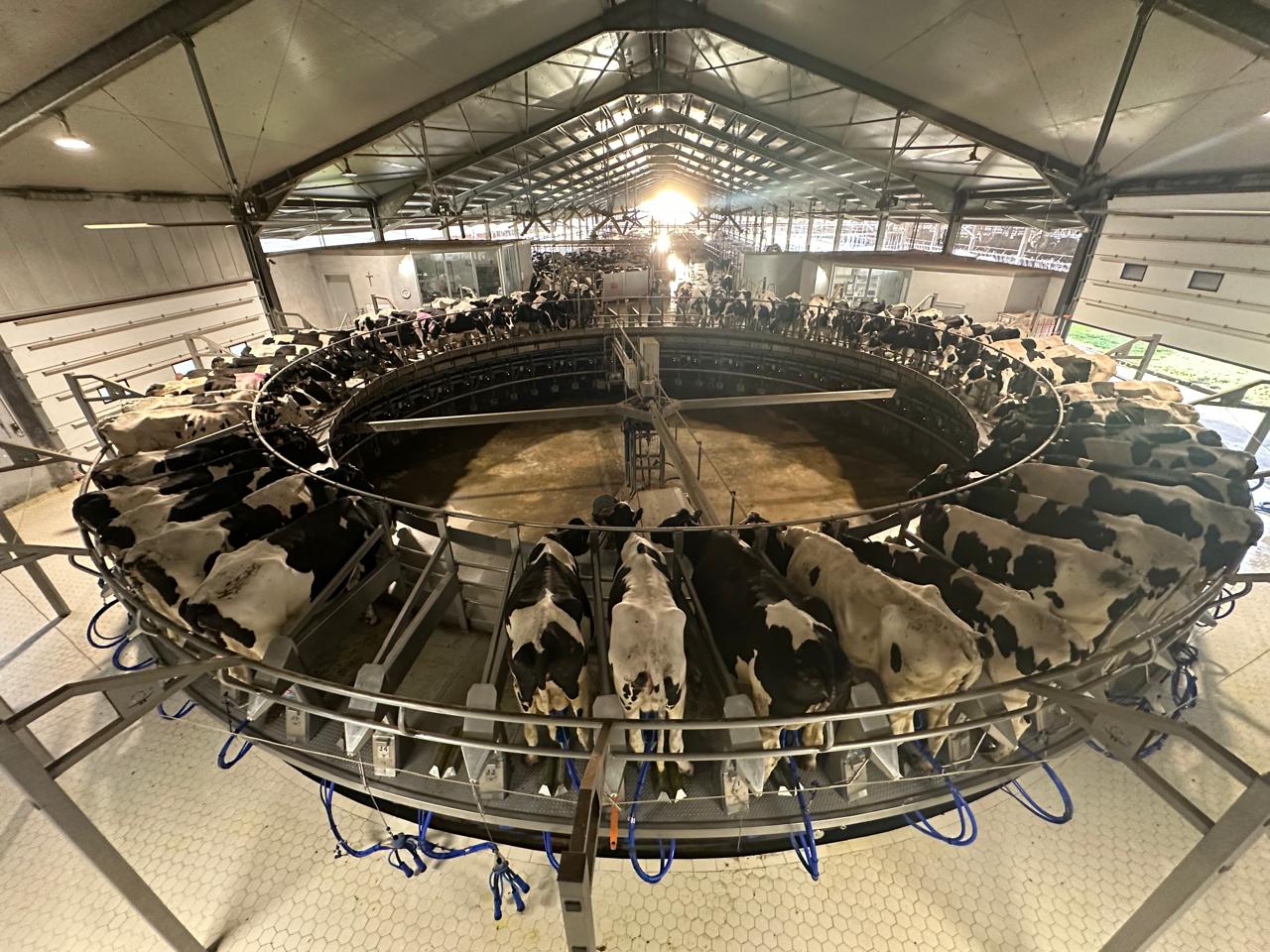
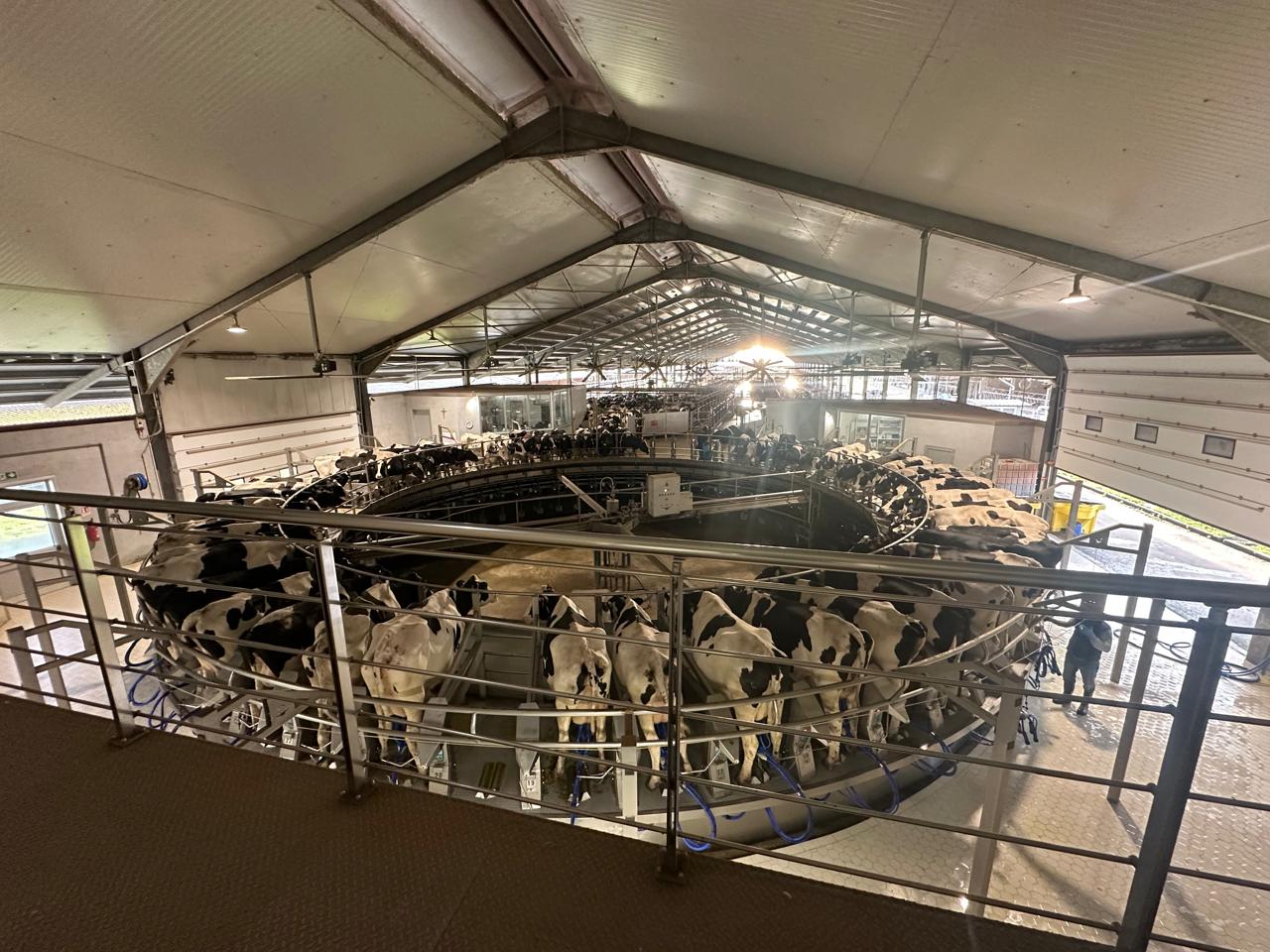
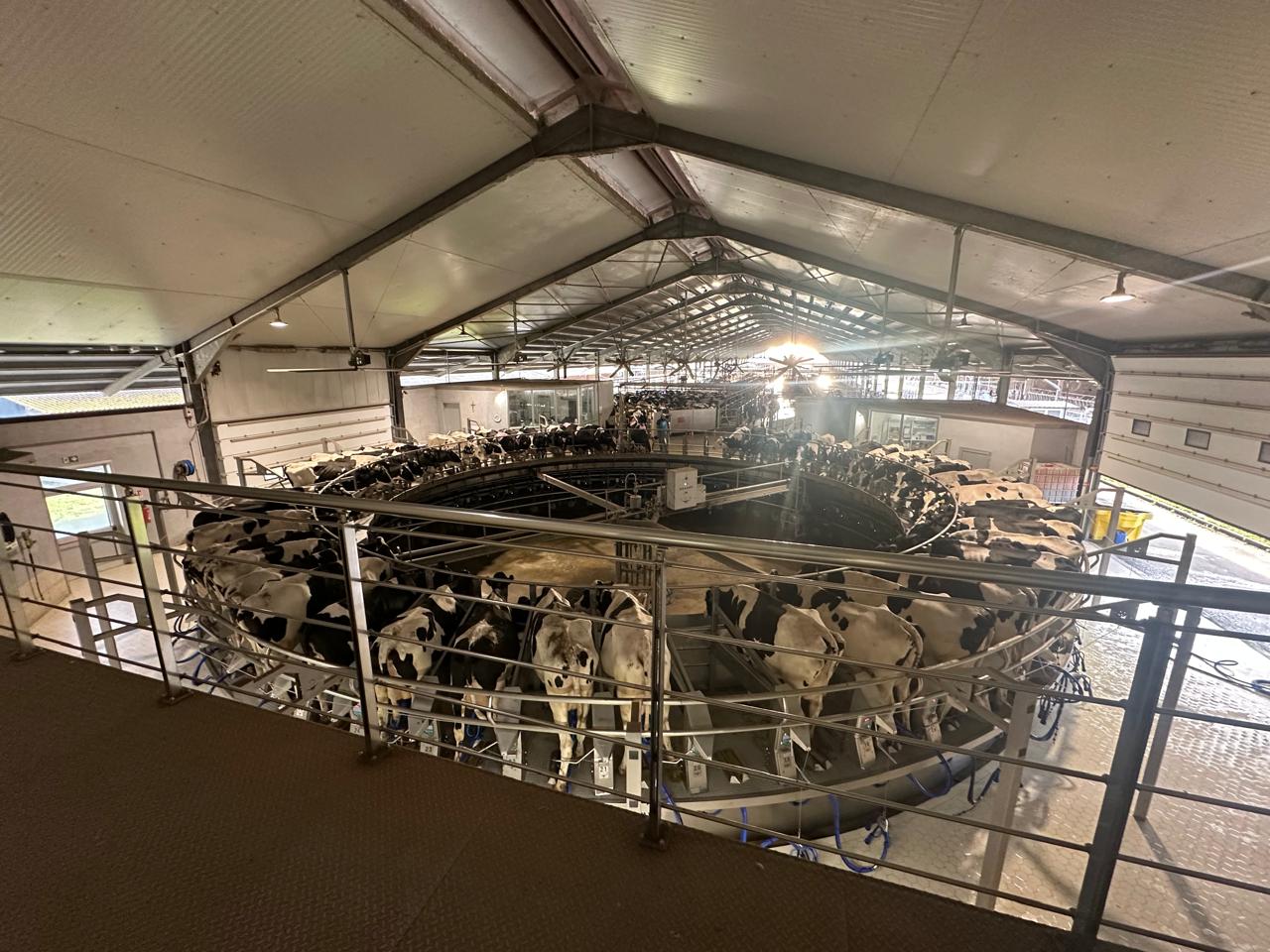
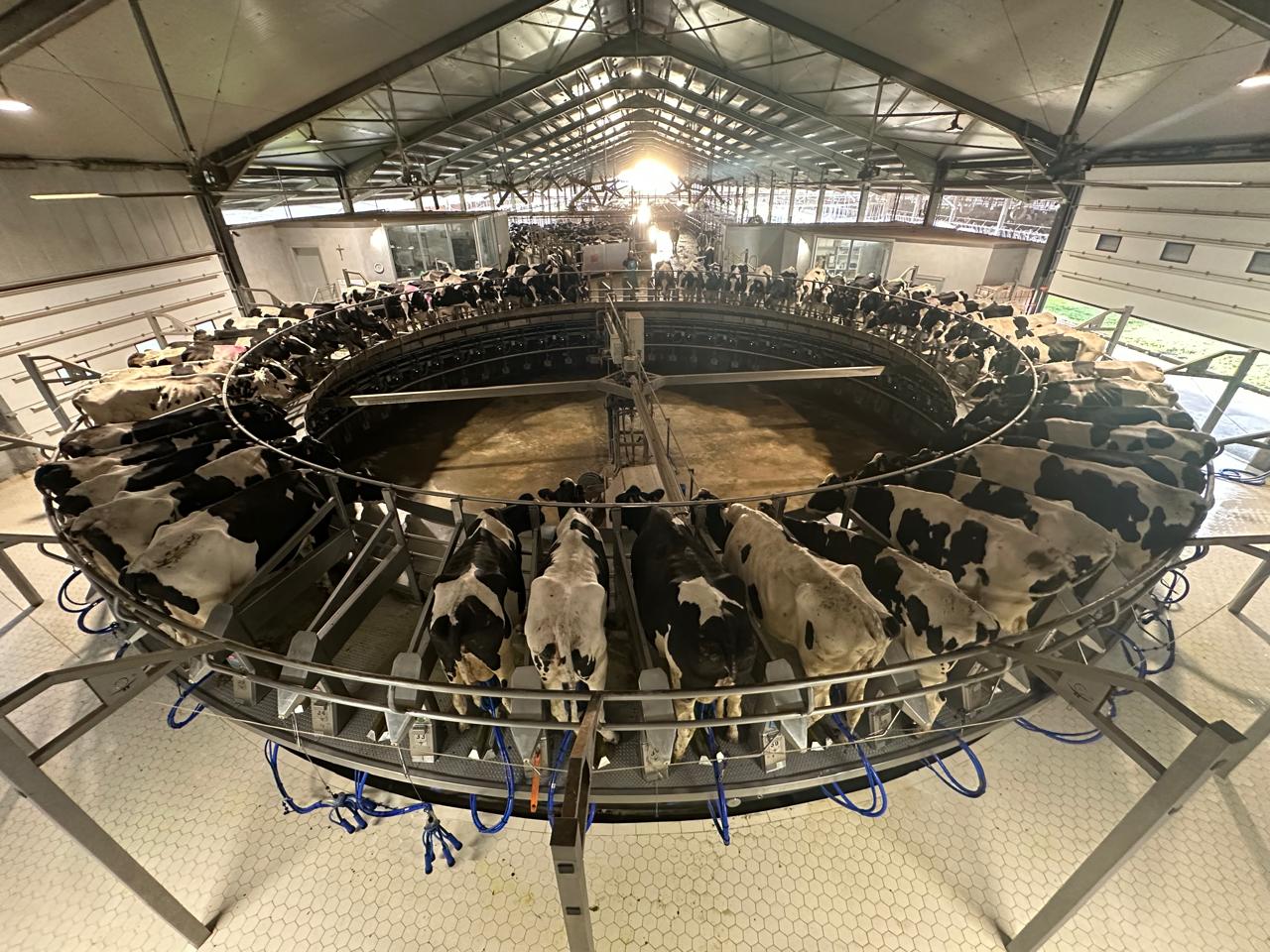
Holstein-Friesians on the rotary milking carousel. Note the automated milking cups (blue tubing) attached to each animal.
Daily yield in Europe
Daily yield in Egypt
Local Baladi breed
Where the cattle come from
The dominant exporter to MENA. Dutch Holsteins are globally regarded as the highest-yielding dairy breed. The Netherlands exports tens of thousands of heifers annually to Egypt, often through specialist livestock shipping firms via Rotterdam port.
German cattle — particularly the dual-purpose Fleckvieh (Simmental) — are increasingly popular in Egypt for farms seeking both milk and quality beef. German exports are regulated under strict EU animal welfare standards, commanding a premium price.
Post-Brexit, UK cattle exports to MENA have grown as British farmers seek new markets. British Friesians are well-regarded for their hardiness, and Aberdeen Angus genetics are increasingly used to improve beef quality in Egyptian feedlot operations.
Italian dairy genetics, particularly from Lombardy, are prized for high butterfat content — ideal for Egyptian cheese production. The Piemontese beef breed is also exported for its exceptional tenderness, and Italian livestock traders have strong historic ties to North African markets.
Why importing
isn’t simple
Holstein-Friesians suffer acute heat stress above 28°C. Egyptian summers regularly exceed 42°C. Without active cooling systems — fans, misters, shade — milk production collapses and mortality risk spikes within days of arrival.
European cattle have limited immunity to Foot-and-Mouth Disease strains prevalent in MENA. A strict 30-day quarantine period and multi-dose vaccination protocol is mandatory under Egyptian veterinary law before any import is cleared.
European TMR (Total Mixed Ration) diets are radically different from Egyptian forage. Transitioning cattle from Dutch silage to Egyptian berseem clover without causing digestive disruption requires a 3–6 week managed feed adaptation programme.
Livestock sea transport from Rotterdam or Genoa to Alexandria takes 5–9 days. Poorly ventilated vessels or overloading can result in 2–5% mortality rates — a significant financial loss at €2,000–3,500 per animal.
Watch the rotary parlour live
Uncut footage from inside our Holstein-Friesian facility — the automated carousel running at full capacity.